
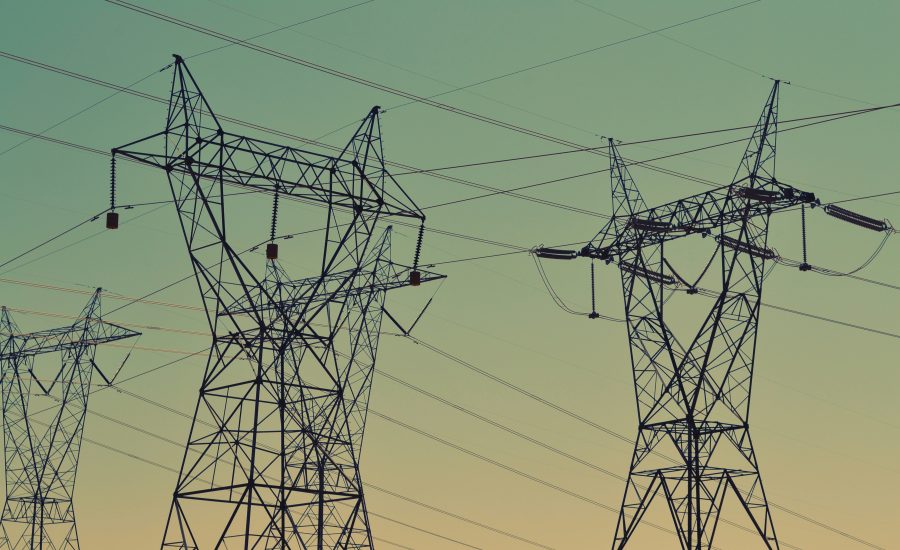
The infrastructure that powers the digital economy is running into a limit that no amount of software optimization or cloud architecture refinement can resolve: there is not enough electricity available to power everything trying to connect to it at once. In west London, where dozens of data centers have been built or are planned, the local grid has reached capacity to the degree that completed residential housing developments may not receive full grid connections until 2037. That is not a projection about future strain. It is the current condition, and it is affecting decisions about where businesses can operate and expand right now. In the United States, data center power consumption is projected to increase 22 percent in the next year alone and to nearly triple by 2030. The collision between digital infrastructure growth and physical electricity network capacity is no longer a problem being managed at the margins. It is a structural constraint that is beginning to shape business decisions in ways that most owners have not yet built into their planning.
Understanding where this constraint is coming from, how fast it is developing, and what it means for businesses that depend on cloud infrastructure and digital services is more actionable than the general observation that energy and technology are on a collision course.
What Is Actually Driving the Consumption Surge
Data centers have always been energy-intensive facilities. What has changed is the character of the workloads they are being asked to run and the speed at which those workloads are scaling.
A conventional data center running storage and standard compute workloads requires significant power, but the density of that power requirement is manageable within the planning assumptions that electricity networks have operated on for decades. An AI-focused data center running training workloads and large-scale inference is a qualitatively different energy consumer. The GPU clusters that AI workloads require operate at power densities that exceed conventional server infrastructure by substantial margins, and they generate heat that requires advanced cooling systems that add their own significant energy demand on top of the compute load. A single large AI-focused facility can consume as much electricity as 100,000 homes, and the facilities being built now are larger than the ones that established that benchmark.
The pace of AI adoption means that these facilities are not being built in isolation. They are being built simultaneously, in the regions where fiber infrastructure, land availability, and existing power connections make them feasible, which means the power demand is concentrating geographically at exactly the points where grid capacity is being most rapidly consumed. The electricity networks serving these regions were not designed for this rate of demand growth, and the infrastructure upgrades required to expand their capacity operate on timelines measured in years to decades, not months.
The consequence is a gap between demand and available supply that is widening faster than infrastructure investment can close it. That gap has direct effects that extend well beyond the data center operators experiencing connection delays. It affects the businesses that depend on the cloud services those data centers provide, the communities competing with data centers for grid capacity, and the broader economic development of regions where energy availability is becoming a binding constraint on what can be built and operated.
How the Constraint Reaches Businesses That Do Not Operate Data Centers
The energy constraint in data center infrastructure translates into business impact through several mechanisms that are worth understanding separately because they require different responses.
Cost transmission is the most direct mechanism. When data center operators face higher energy costs, whether through market pricing, infrastructure investment requirements, or efficiency mandates, those costs move through cloud service pricing to the businesses consuming those services. Organizations that have built operating models around cloud cost assumptions established in periods of relative energy abundance are going to find those assumptions increasingly unreliable as energy constraints tighten and the costs of serving demand under constrained conditions rise.
Geographic constraints on expansion represent a less obvious but potentially more significant impact for businesses making location decisions. The regions where data center energy demand is most concentrated are increasingly the regions where grid capacity for new connections is most constrained. A business evaluating where to locate operations that depend on high-capacity, reliable digital connectivity is now evaluating energy availability as a site selection factor in ways that would have seemed abstract five years ago. The London example, where housing developments face connection delays measured in decades, is an extreme illustration of a dynamic that is emerging in various forms across multiple major markets.
Service reliability risk is the third mechanism. Data center operators managing facilities against constrained grid capacity face conditions that increase the probability of power events affecting service continuity. Businesses that have not built resilience into their IT infrastructure on the assumption that cloud services provide sufficient reliability are carrying a risk that the energy constraint makes more concrete. The grid strain that is producing connection delays for new developments is the same strain that affects the reliability of existing connections under peak demand conditions.
What Strategic Adaptation Actually Looks Like
The business response to energy as a strategic constraint is not primarily about individual companies solving the infrastructure problem. It is about incorporating energy availability and cost trajectory into planning and investment decisions in ways that the current environment makes necessary.
Cloud provider selection is one area where energy considerations are becoming a genuine differentiating factor rather than a secondary concern. Providers that have invested in renewable energy supply, efficient cooling technology, and geographic distribution of capacity across multiple grid regions offer a different risk profile than providers whose infrastructure is concentrated in constrained markets and dependent on grid conditions they cannot control. Auditing your current cloud usage against provider efficiency and resilience profiles, and understanding how your provider’s energy strategy affects your cost and reliability exposure, is a planning step that the current environment makes relevant even for organizations that have not historically considered it.
Resilience investment in the form of backup power capability and edge computing infrastructure reduces dependency on centralized data center availability in ways that the current grid strain makes more valuable. Processing data closer to where it is generated and used, rather than routing everything through facilities that are themselves subject to grid constraints, distributes the risk in ways that improve continuity under conditions that centralized infrastructure cannot guarantee. The cost of resilience investment looks different when evaluated against the cost of service disruption in an environment where grid reliability is under genuine pressure.
Location planning for any facility or operation that requires high-capacity, reliable digital connectivity should now include explicit evaluation of energy availability in candidate markets. The assumption that digital connectivity is uniformly available wherever fiber infrastructure exists is no longer accurate in markets where grid capacity has reached the constraints that London is experiencing. Organizations making long-term location commitments without evaluating the energy availability dimension of those markets are building on an assumption that the current infrastructure reality does not support.
The Planning Horizon This Requires
The infrastructure gap between data center energy demand and available grid capacity is not going to close quickly. Grid infrastructure upgrades require regulatory approval, capital investment, and construction timelines that are measured in years under favorable conditions and in decades under the constrained permitting and supply chain conditions that currently affect major markets. The AI adoption curve that is driving demand growth is not flattening. The facilities being planned and built today will be drawing power from grids that are already at capacity, and the demand they add will compound the constraint before infrastructure investment can materially expand supply.
For business owners, the appropriate planning horizon for this issue is longer than most operational planning cycles extend. The decisions being made now about cloud infrastructure dependency, location, resilience investment, and energy strategy will be evaluated against conditions that are going to be meaningfully different from the conditions under which previous equivalent decisions were made. Organizations that build energy availability into their strategic planning now, as a genuine constraint rather than a background operating assumption, are developing the adaptive capacity that the next several years are going to require. Those that continue to treat energy as a stable, available, and predictably priced input to digital operations are building plans on a foundation that the current infrastructure reality is actively undermining.